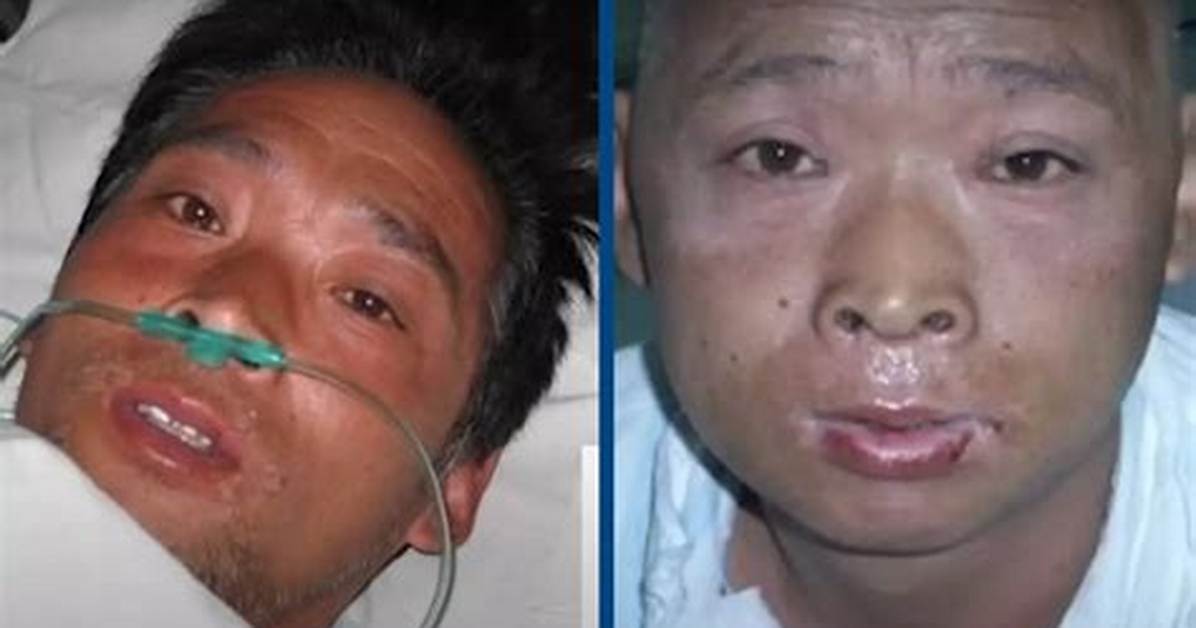
Who Is Hisashi Ouchi?
Hisashi Ouchi was an Ibaraki local with a younger sister, a wife, and a young son. He was a lab worker at the Tokaimura nuclear power station in Japan.
Hisashi Ouchi Exposure To Radiation
He is best known for being in a radiation accident that exposed him to the same amount of radiation as the Hiroshima atom bomb’s epicenter.
He also smoked a pack of cigarettes every day and had played rugby in high school.
There is no information about his parents.
Hisashi Ouchi, 35, was taken to the University of Tokyo Hospital and treated.
Read Also: Jordan Morris – How Much Is He Worth?
An unfortunate incident took place on 30th September 1999.
Hisashi Ouchi worked in the Tokaimura Nuclear Power Plant and was entrusted with the task of reprocessing Uranium by a company called JCO.
That company never followed the SOPs to deal with the processing of Uranium. They were accused of unsafe transfer practices and the use of outdated equipment.
Above all, the employees were never provided any training to handle any unforeseen events or critical work-related emergencies.
On the date of the ill-fated incident, Hisashi Ouchi was performing the task of pouring a mixture of uranyl nitrate into a containment tank.
Unfortunately, that tank was not well equipped to handle the amount of radioactive material that it was supposed to handle. Ultimately, the tank reached its point of critical mass and the nuclear fission chain reaction was started.
Hisashi Ouchi was performing the task and a large portion of his body was directly extended on the tank. Two other people in the room were affected according to their distance from the Tank.
Yutaka Yokohawa was viewing the incident from a distance of fifteen feet along with another colleague, Masato Shinohara. They all narrated the incident to investigators that they heard a large banging noise and the room was filled with a blue flash which was generating a large number of neutron beams and gamma radiation.
Ouchi had severe radiation burns across most of his body, significant damage to his internal organs, and a near-zero white blood cell count.
Ouchi was vulnerable to hospital-borne viruses due to his weakened immune system, and he was admitted to a particular radiation ward to reduce the danger of infection.
Doctors used peripheral blood stem cell transplantation, which was a novel technique at the time, to try to restore some function to Ouchi’s immune system.
Ouchi’s white blood cell counts momentarily increased after getting the transplant from his sister, but he succumbed to his severe ailments soon after.
The transplanted tissue’s leukocytes were discovered to have been altered by residual radiation in his body, activating autoimmune responses that exacerbated his fast deteriorating health, and white blood cell levels began to drop.
Despite their attempts, Ouchi’s condition deteriorated into multiple organ failure due to substantial radiation damage, exacerbated by Ouchi’s repeatedly heart-stopping.

